Jellyfish filtration system
for water with high microplastic content
Speculative Design Project. 2025.
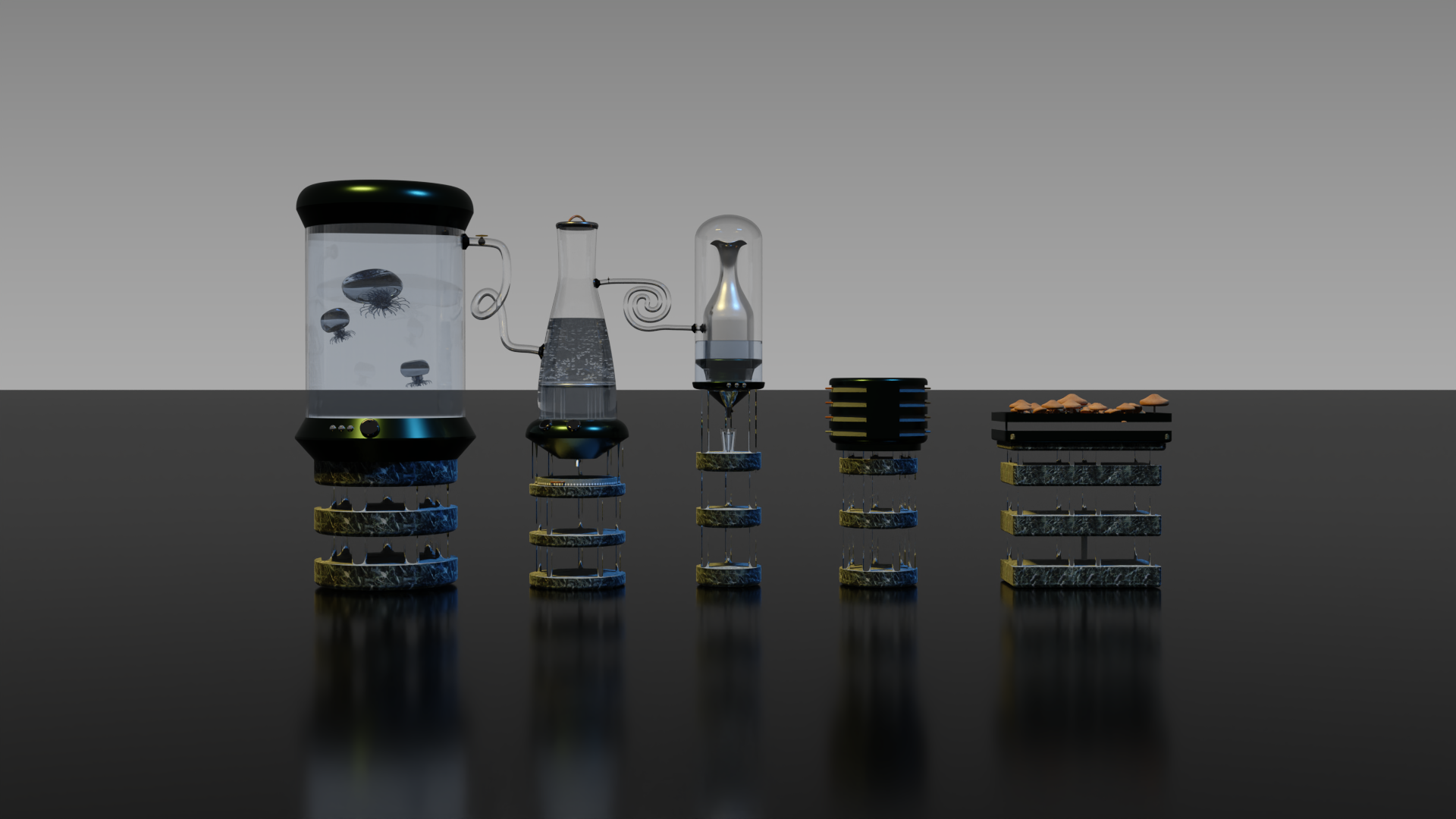
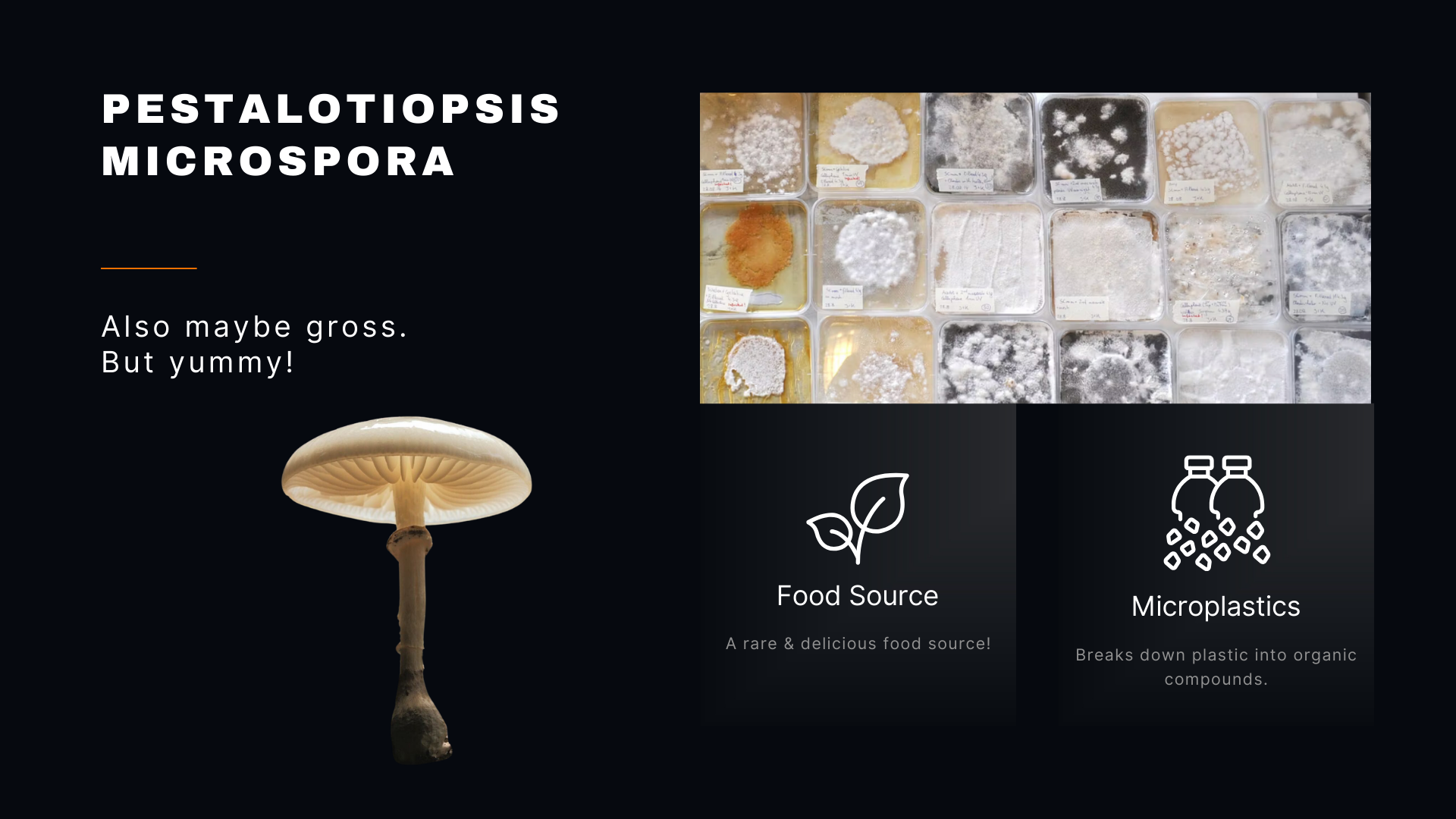
This speculative system uses jellyfish mucus as a primary filtration medium and Pestalotiopsis microspora to biologically break down the collected waste.
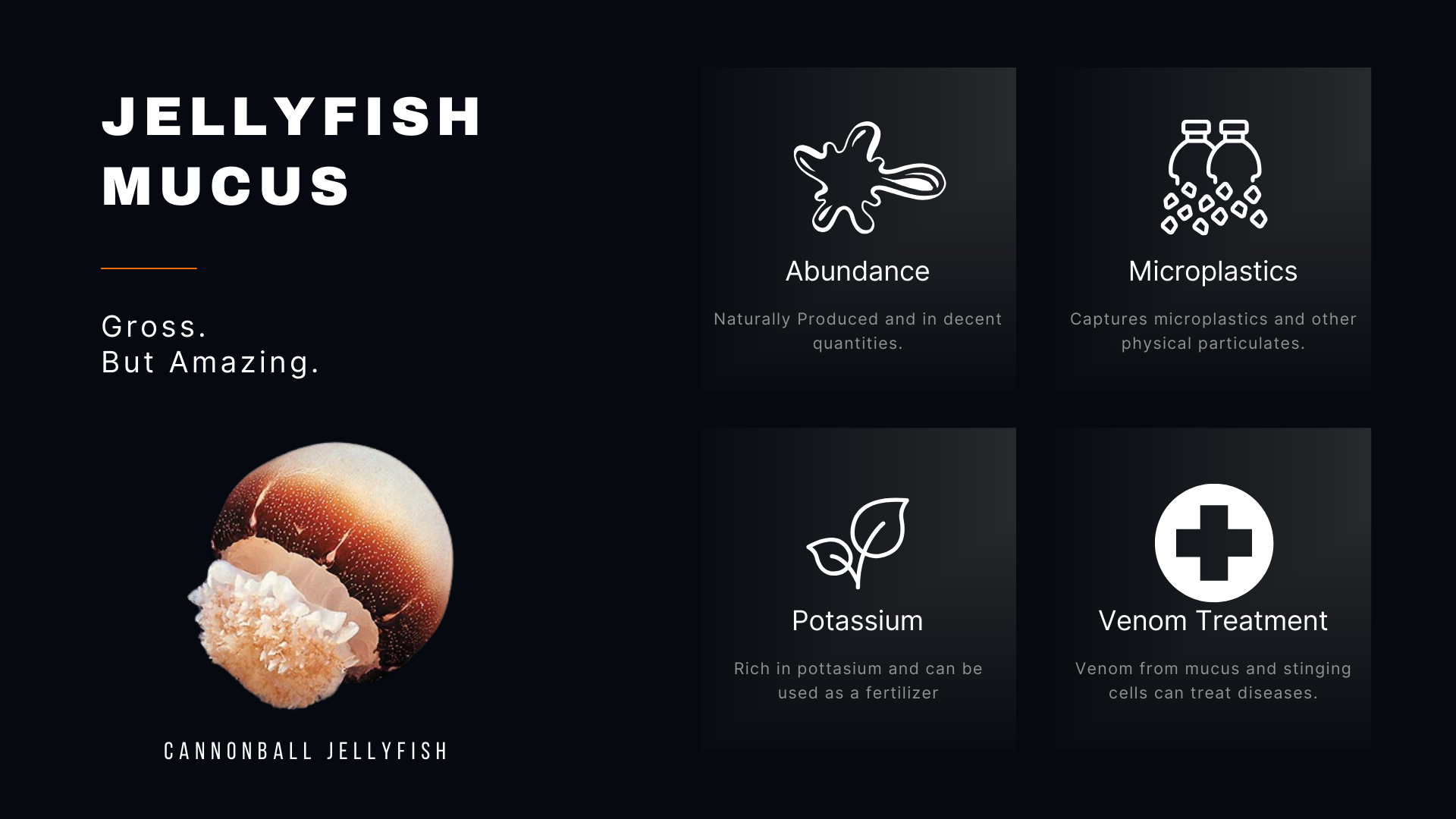
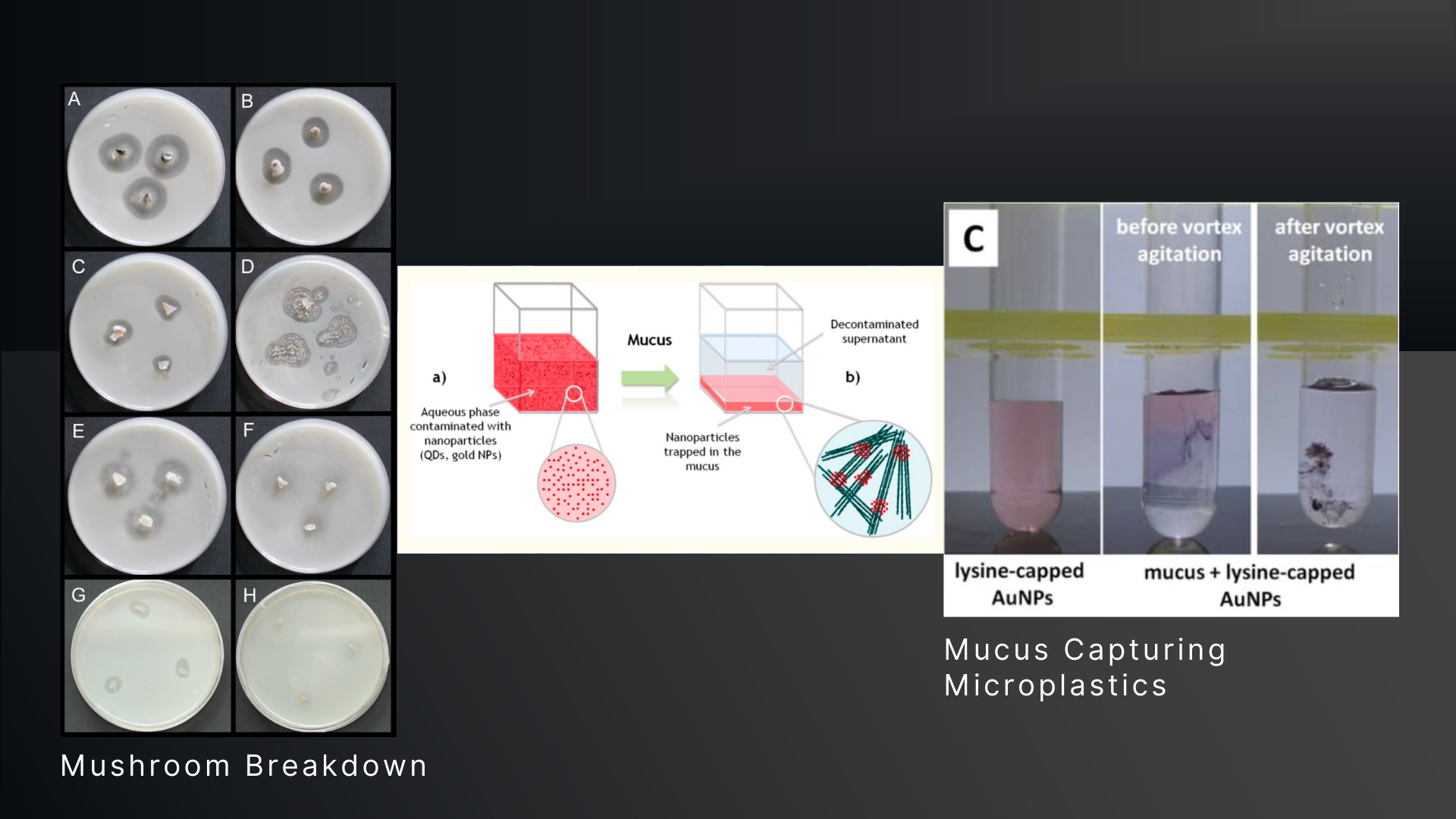
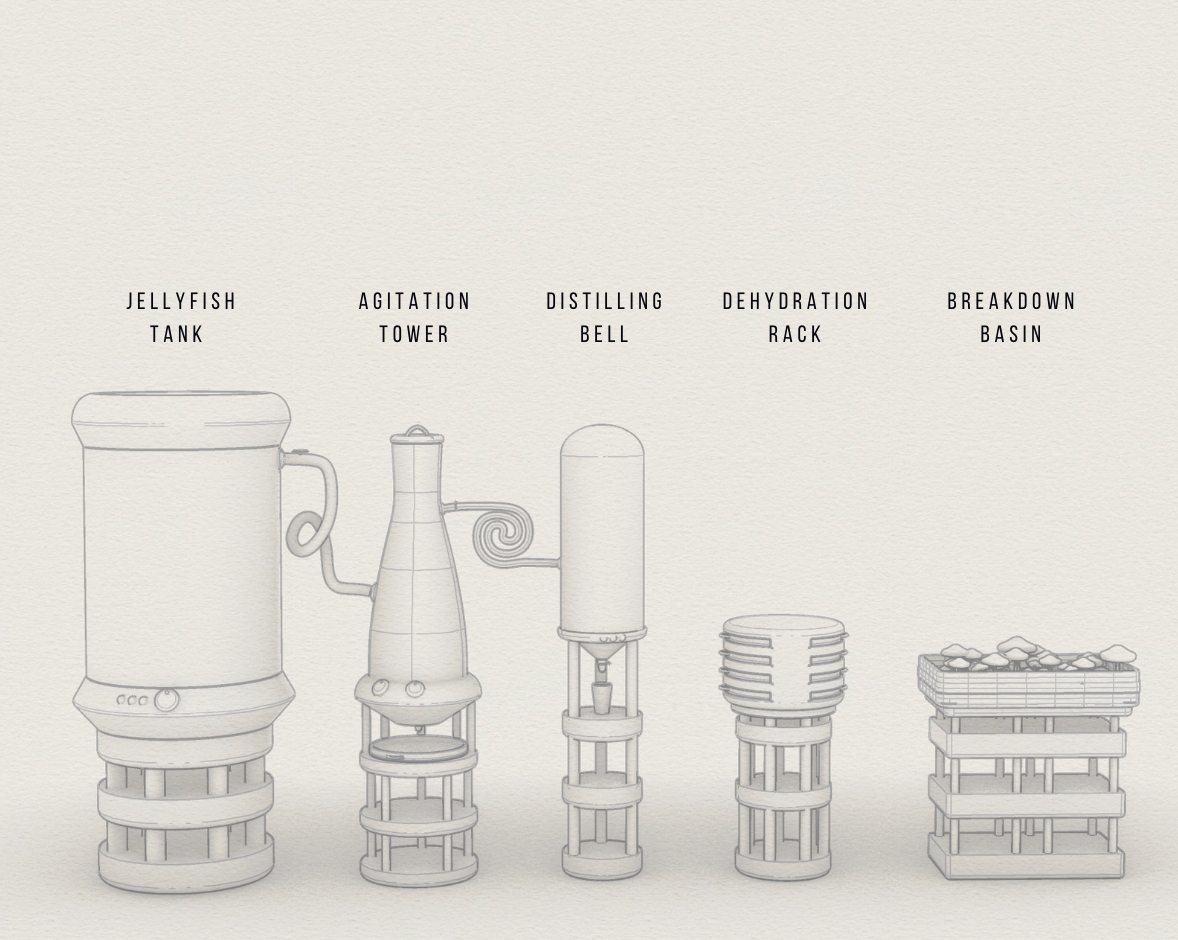
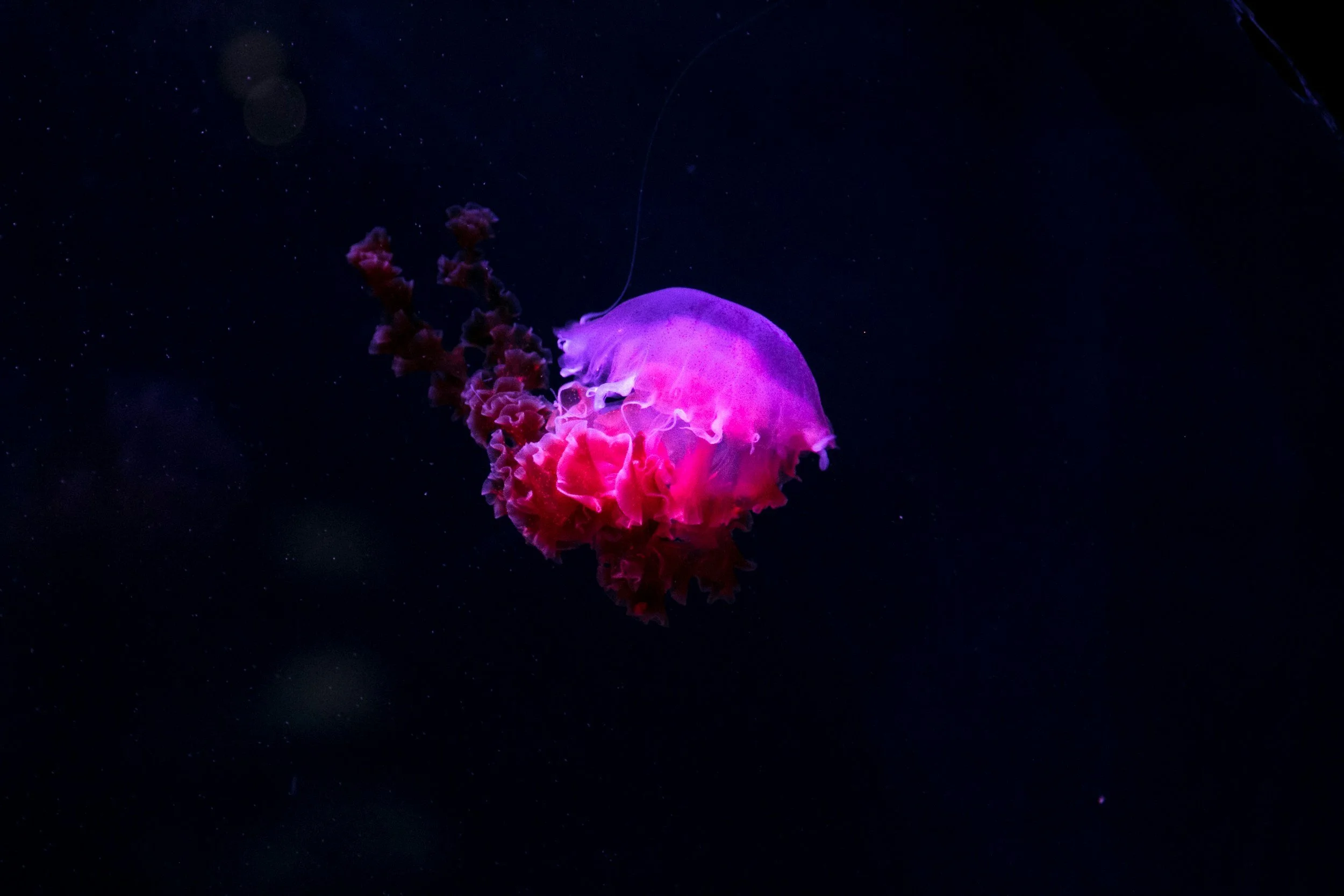
The process begins in the jellyfish tank, where live jellyfish naturally produce mucus. Due to its high buoyancy, the mucus accumulates at the surface of the tank. In the first filtration stage, a controlled amount of this mucus is transferred to the agitation tower, where unfiltered water is introduced. As the mucus binds with nanoplastic particles, its buoyancy decreases, allowing the contaminated mucus to be separated.
The collected mucus is then removed and repurposed as a growth substrate for Pestalotiopsis microspora. At this stage, the water is free of physical pollutants, though chemical contaminants remain.
The partially filtered water enters a distilling bell, where the process removes remaining chemical impurities. Upon completion, the system produces water that is free of both physical and chemical contaminants, demonstrating a closed-loop, bio-integrated approach to water purification.