Design for water Arid Climates: Dubai
Sustainable Skyscraper and Water Generation System.
Industrial Design and Architecture Department Collaboration.
Anthony Zhang (ID+GL)
Richard Jesse Baltazar (ID)
Camilla Radoyce (Arch)
Anna Crookston (Arch)
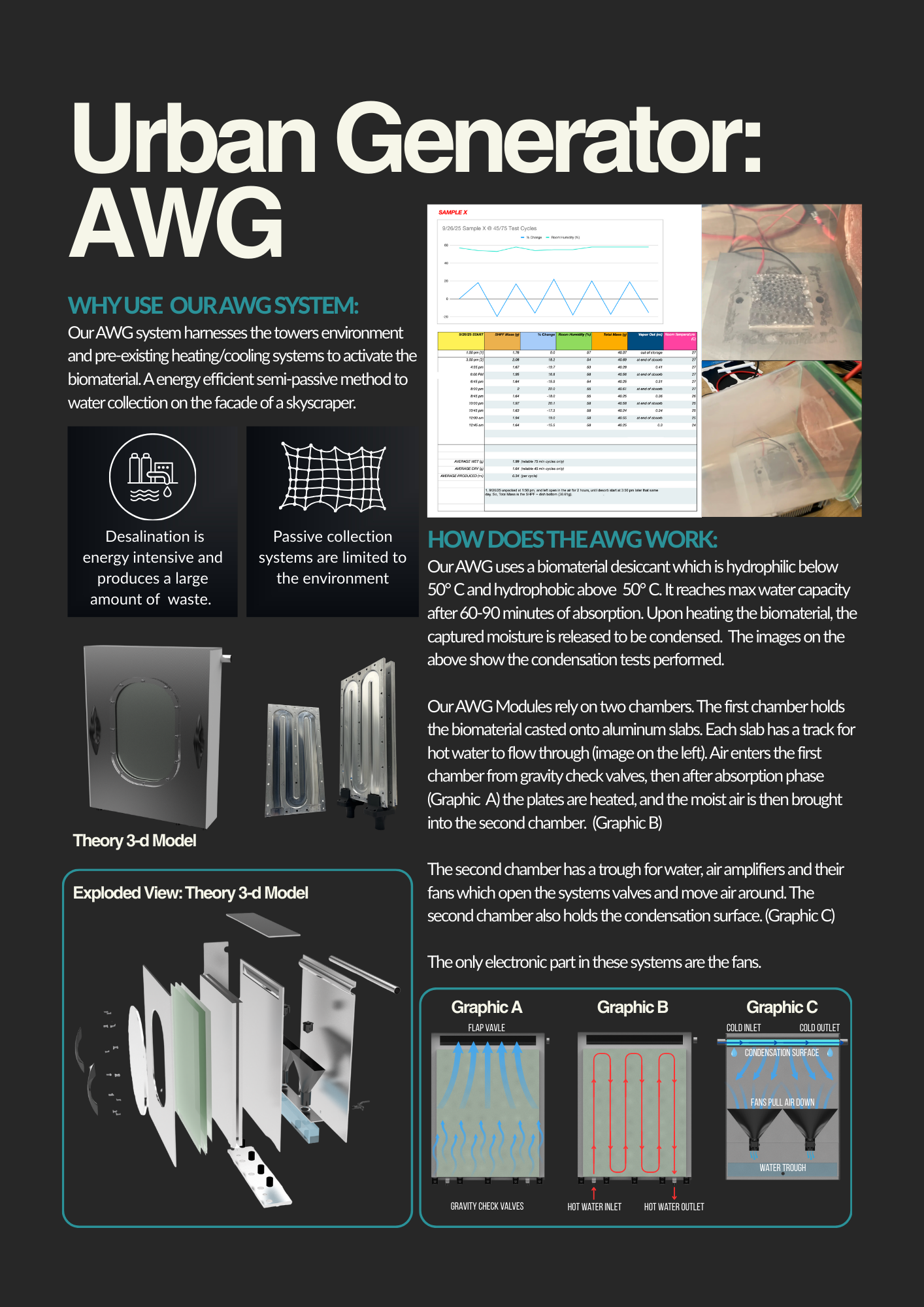
Expanding on the capabilities of AWG’s (atmospheric water generators) developed by SPARK IP and MIT Researchers, we have set out to design a high-rise building capable of generating water and food in the heart of metropolitan Dubai. Rethinking the value of urban space, through sustainable technologies and techniques.
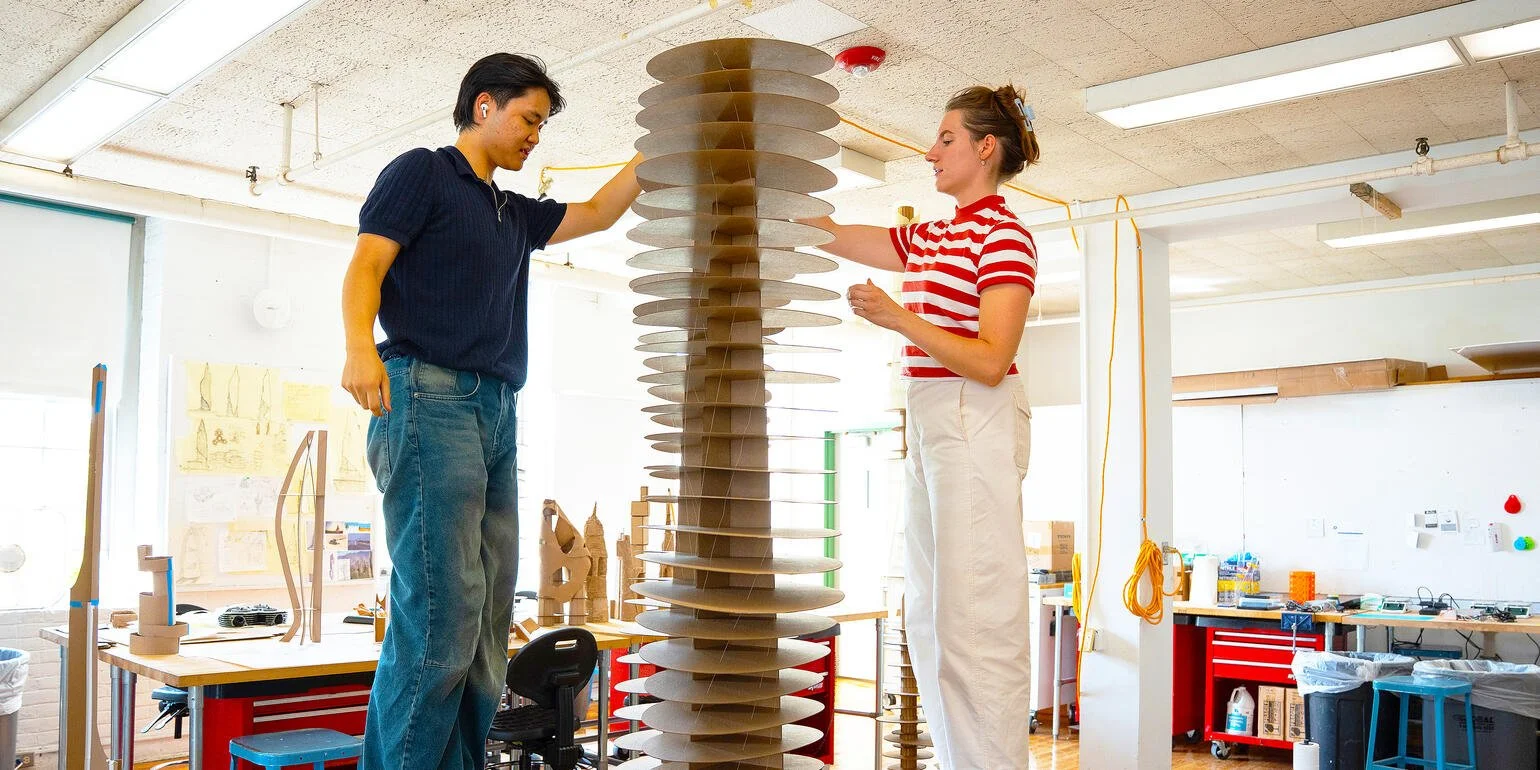
Initial Ideation
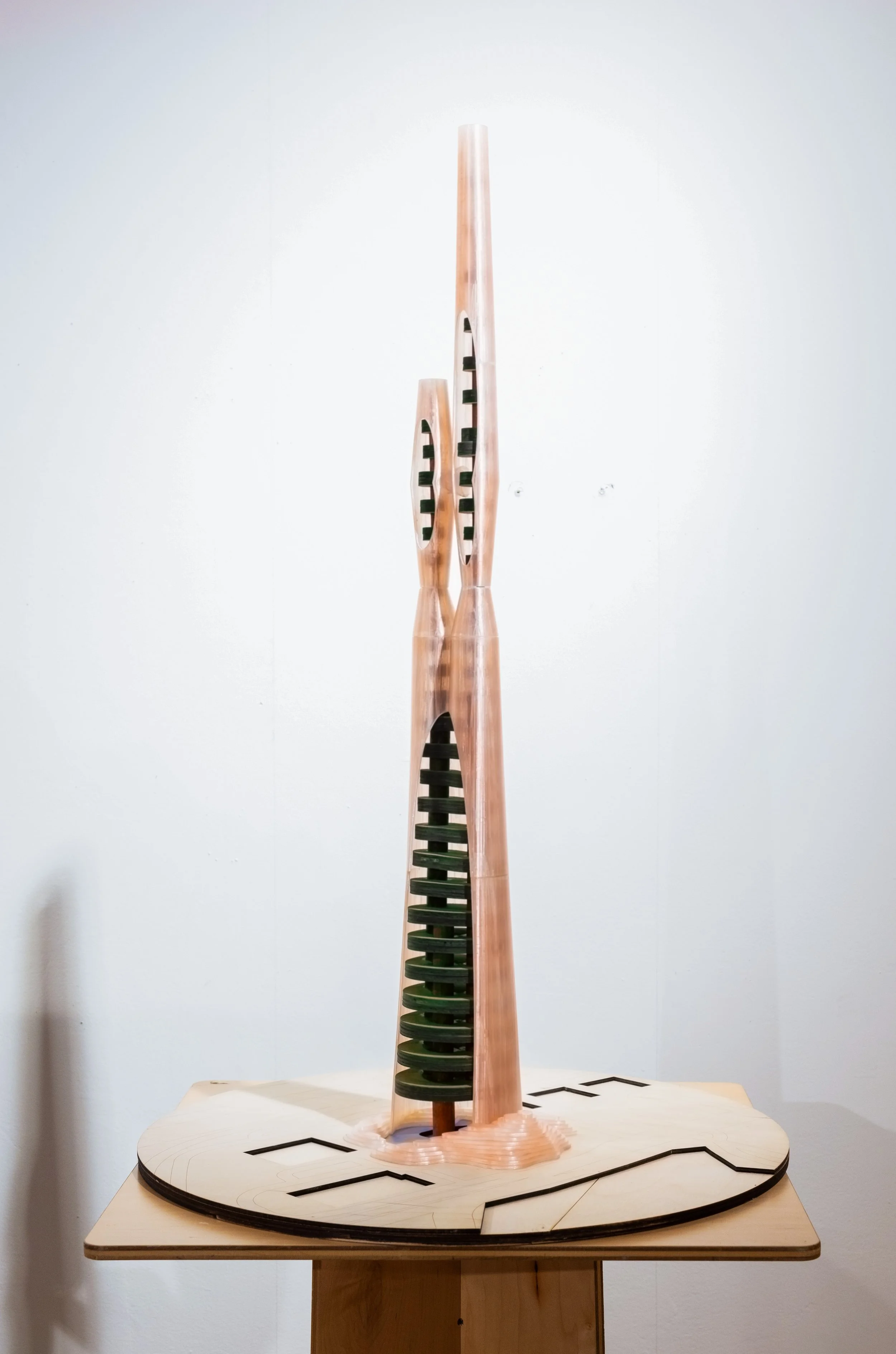
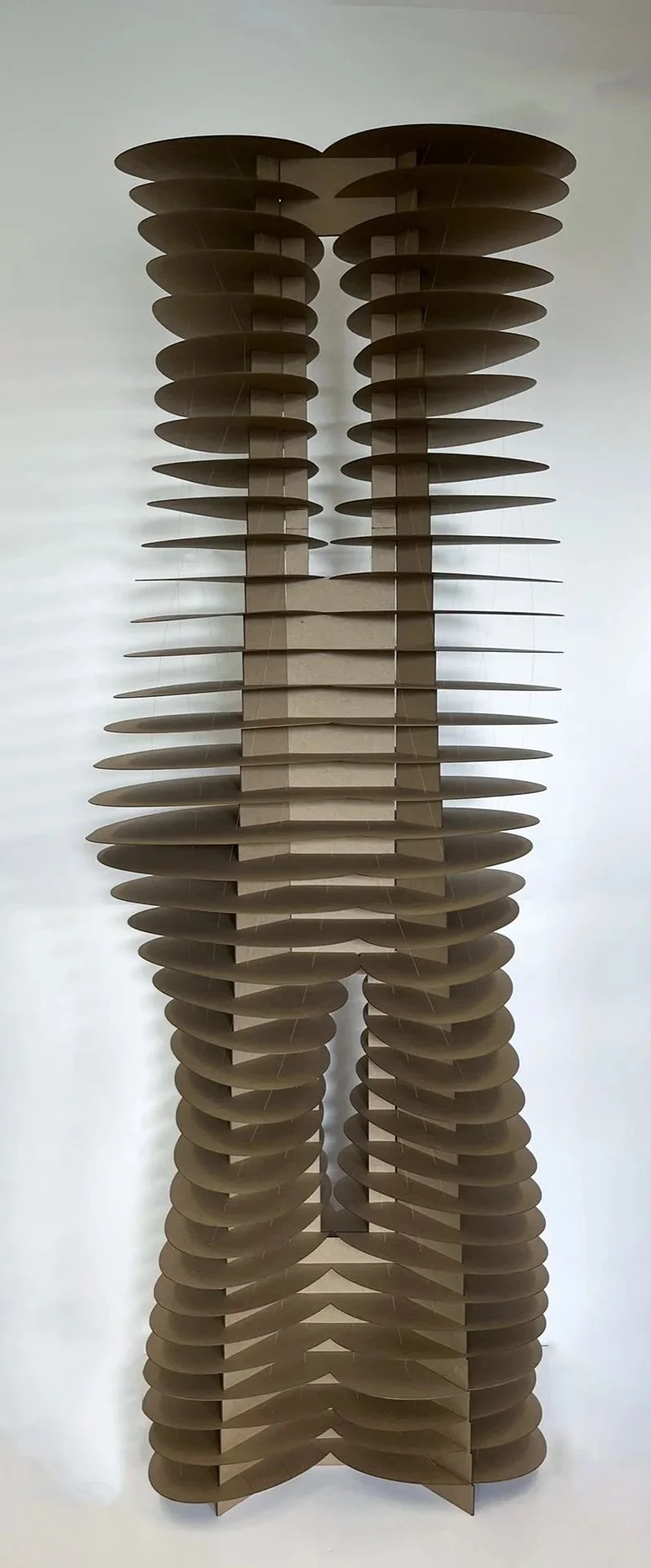
The Dancing Tower is an 8-foot-tall chipboard model exploring a dynamic high-rise system that integrates structure, wind, and program. The design, organized around five buttresses which support two interlinked cores, draws structural inspiration from the Burj Khalifa. The two cores share a central buttress, creating a unified yet flexible structural system.
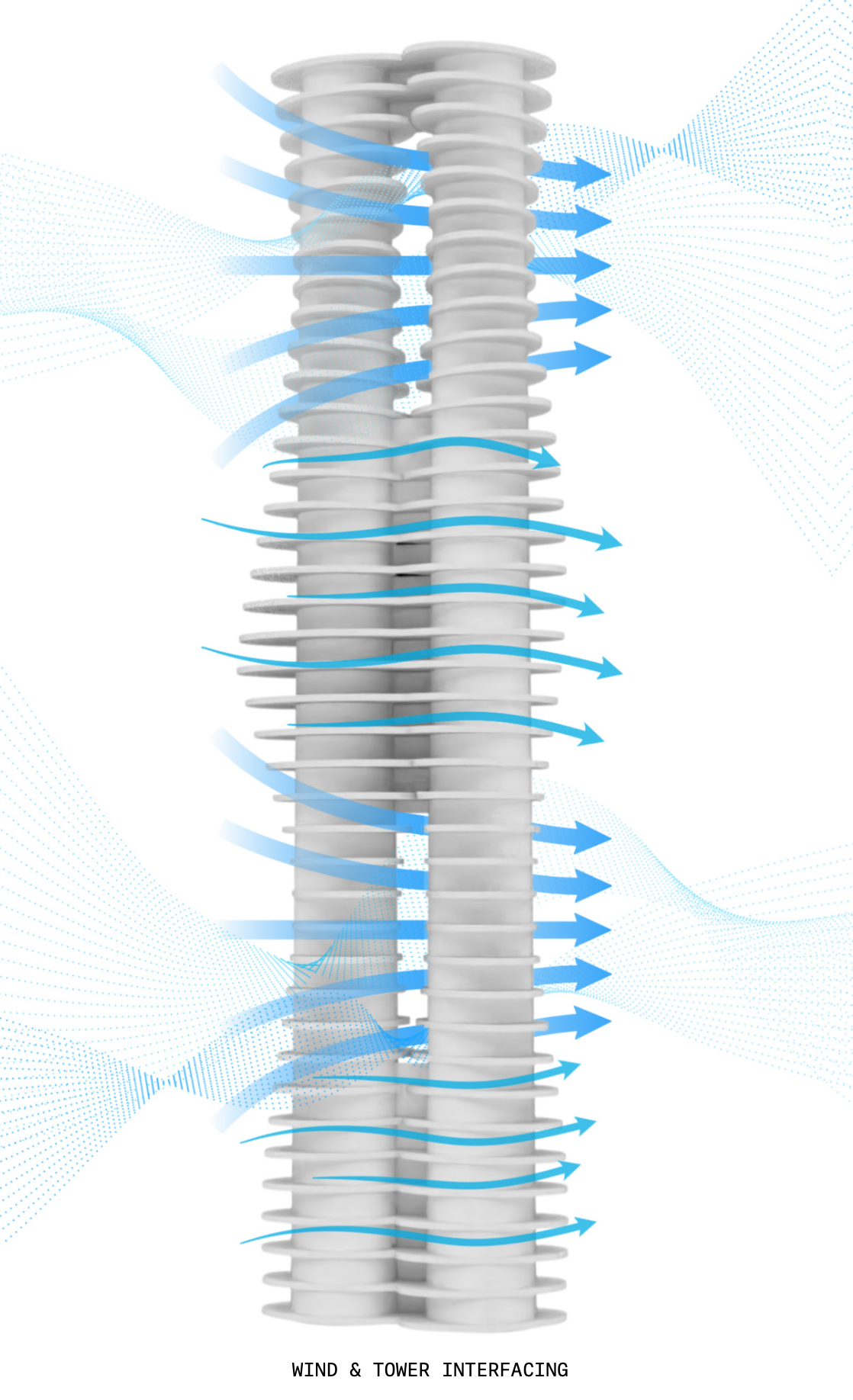
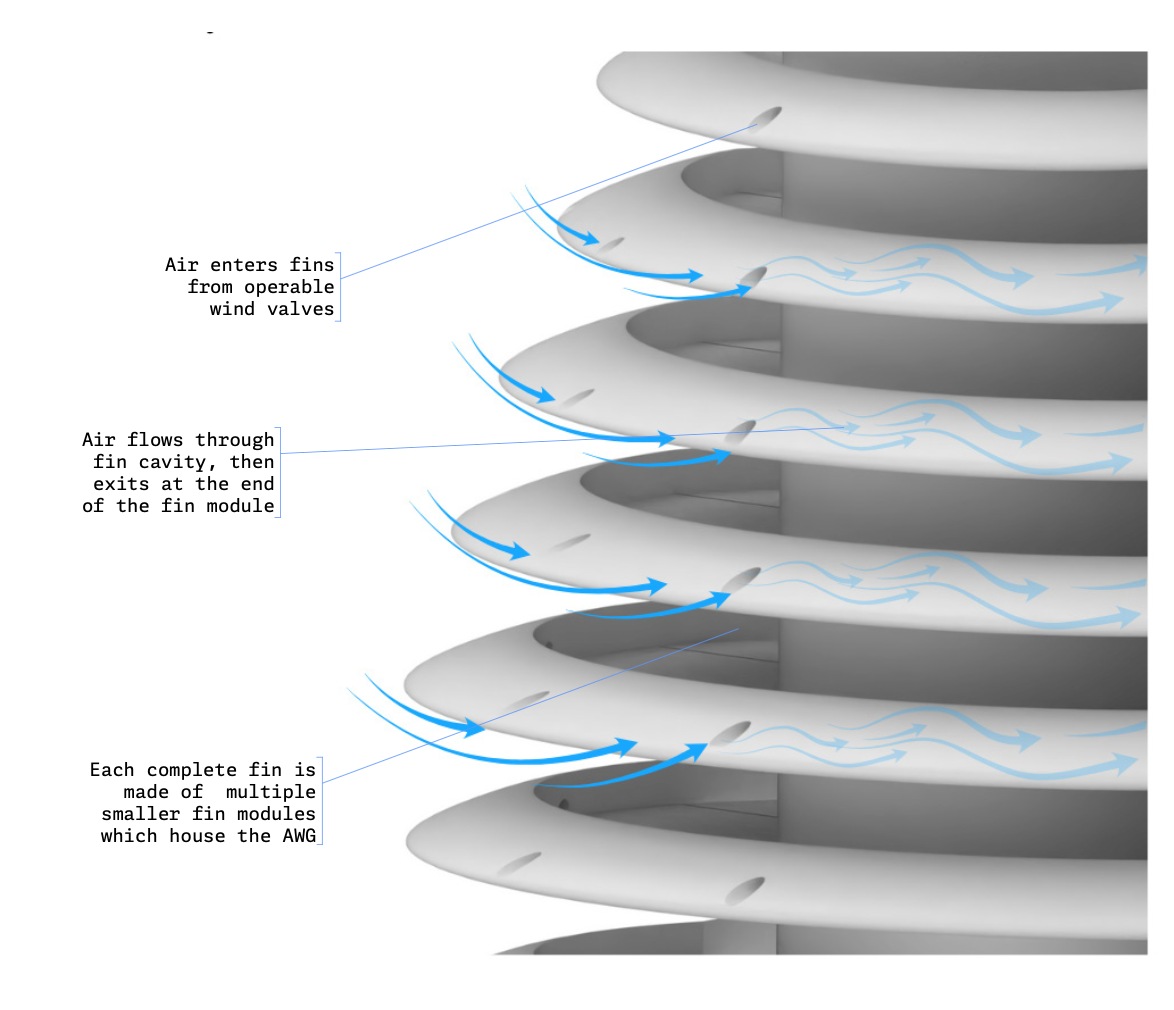
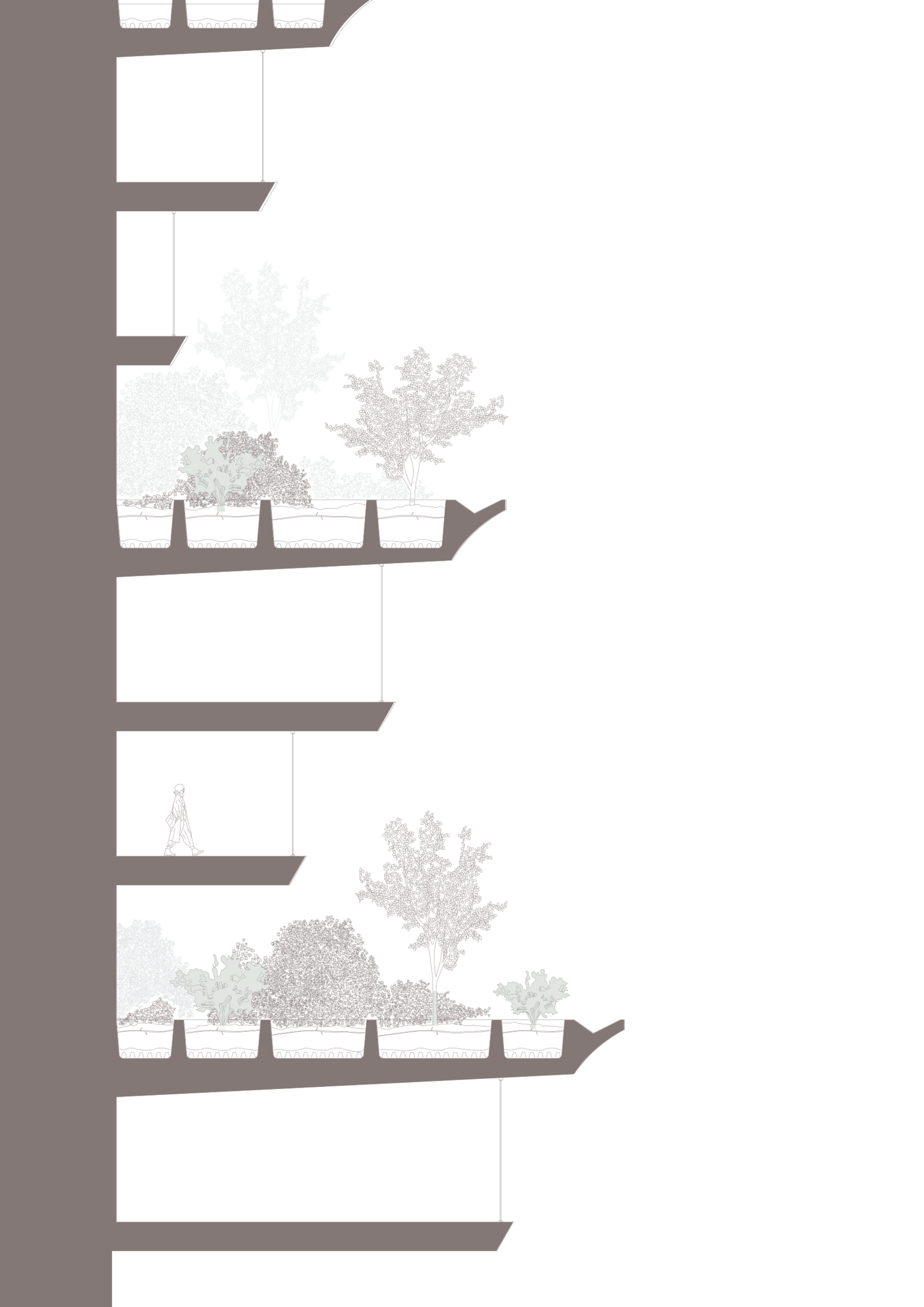
The tower is shaped to engage and harness wind, with fin-like floor plates extending beyond the building envelope to form terraces. These fins allow airflow to pass through the building edge, where it is captured by Atmospheric Water Generation (AWG) material.
The shifting and undulating floor plates create varied sun exposure, supporting diverse growing conditions. Water collected through the AWG system would be used to sustain this agricultural infrastructure.
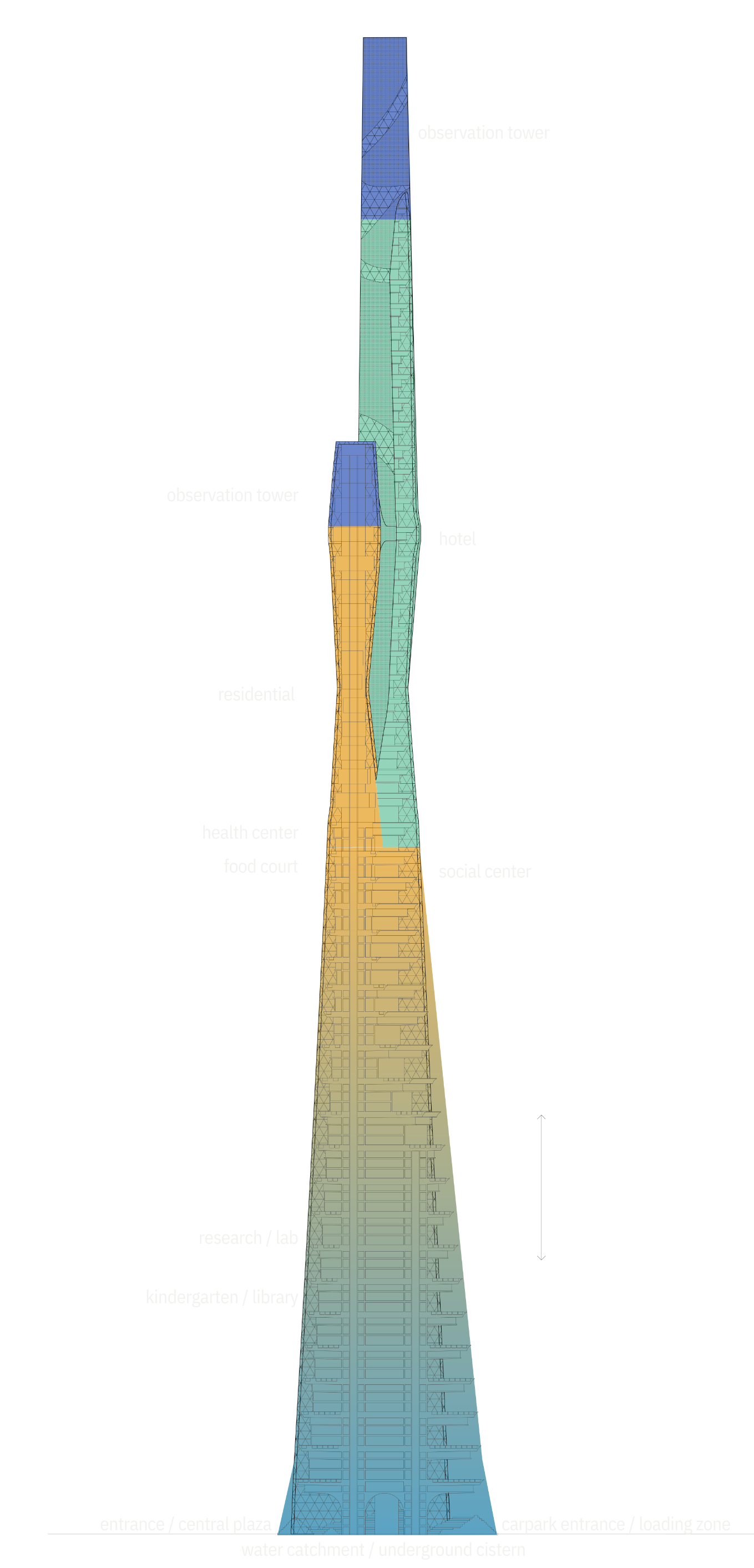
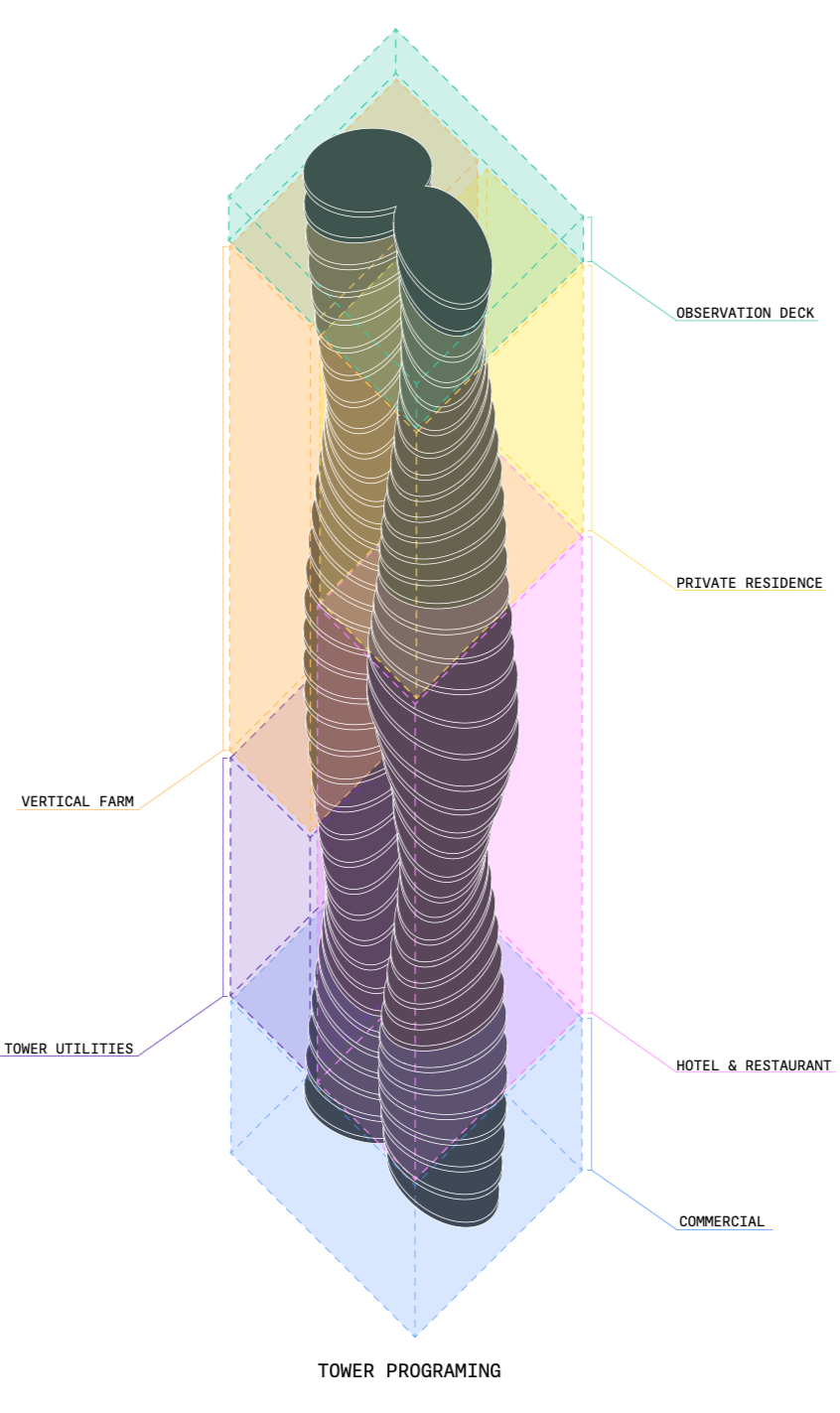
The Images below demonstrate the dancing towers programming, and interfacing with the wind. Further below are diagrams which depict the vertical farm structure and water generating fins.
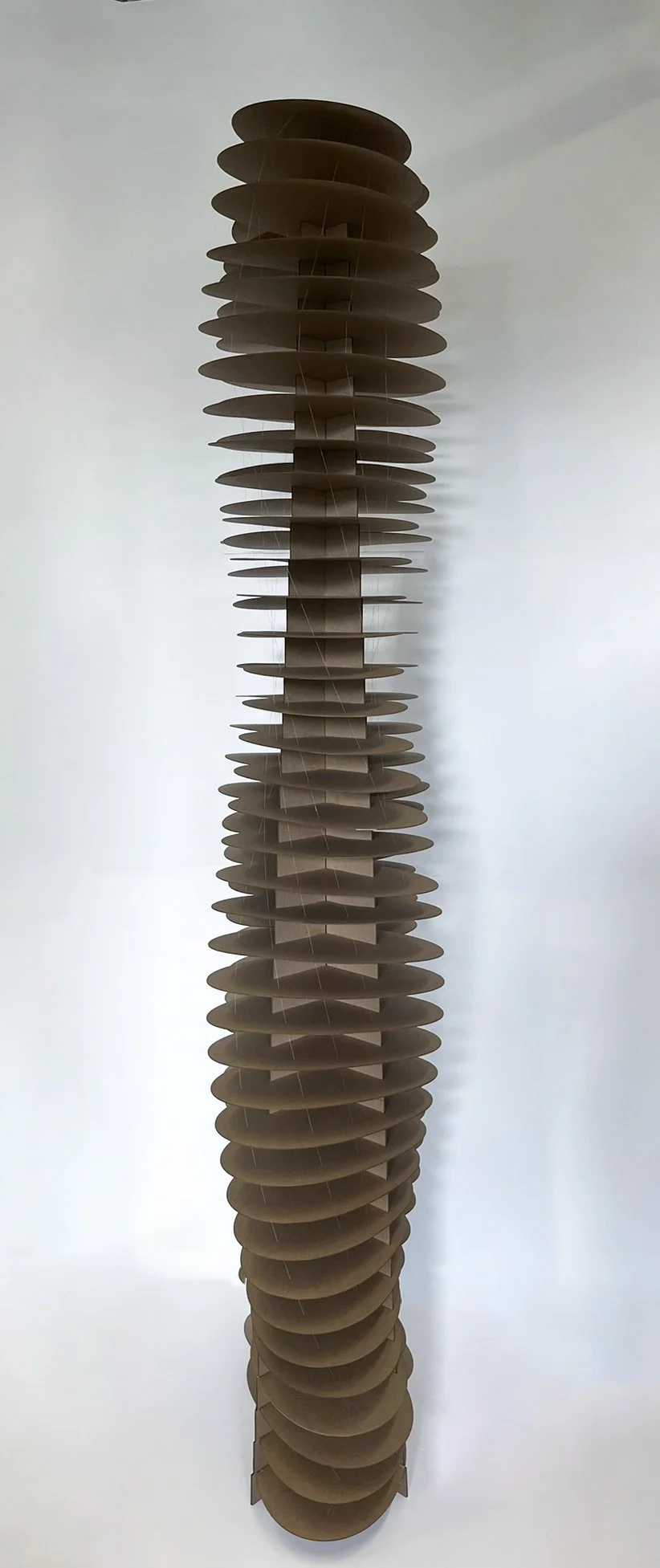
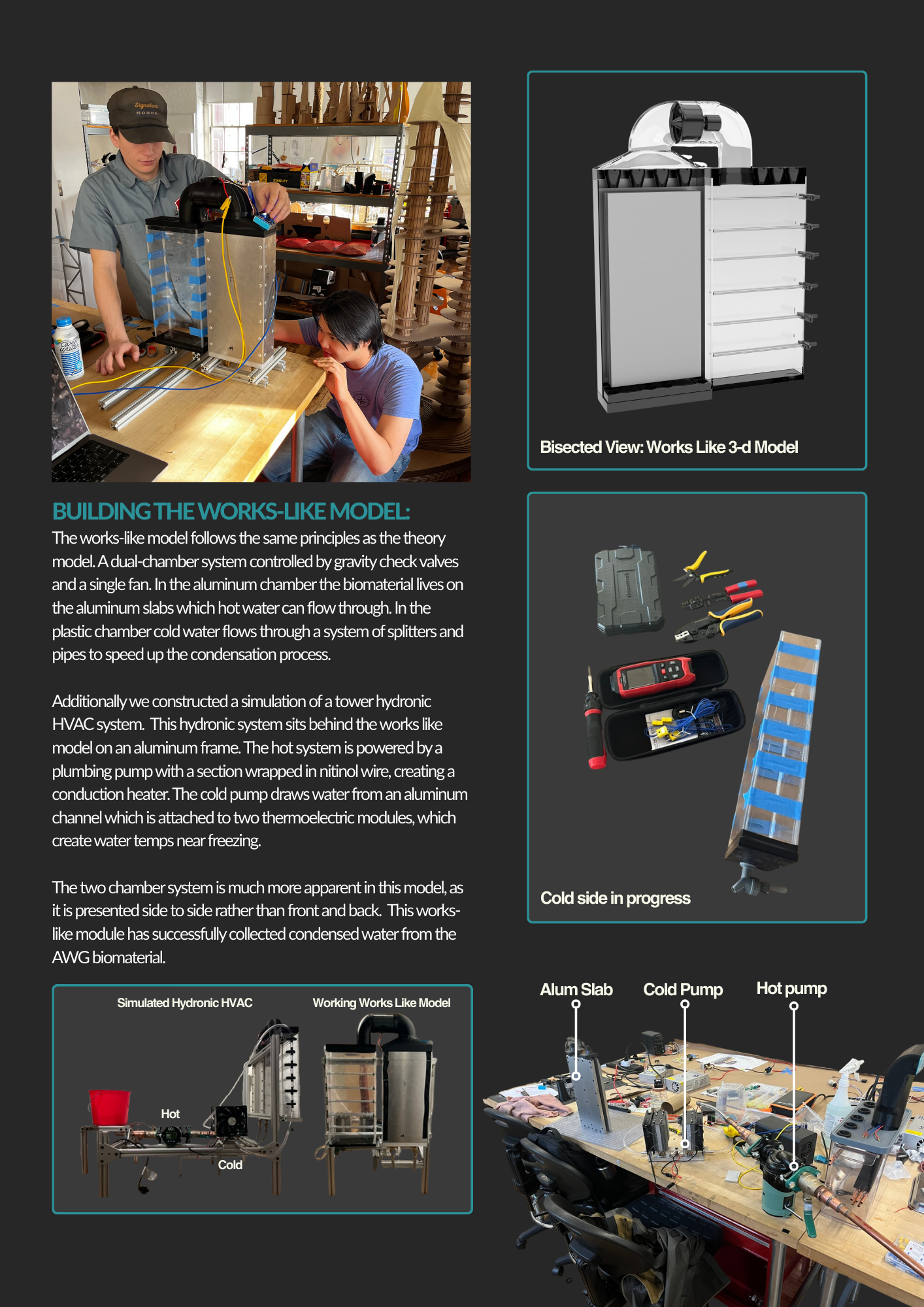
Works-Like Model
Final Design
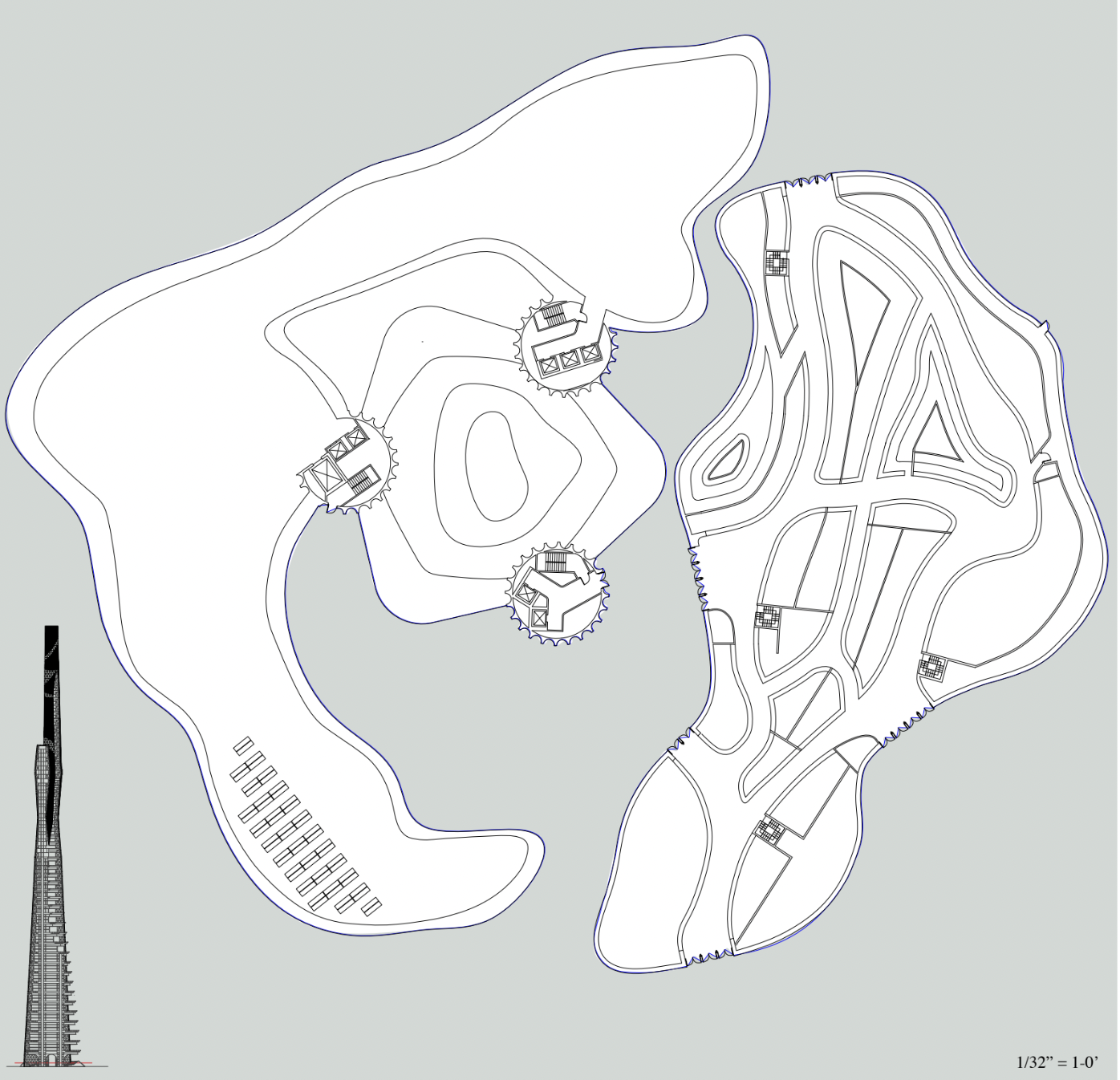
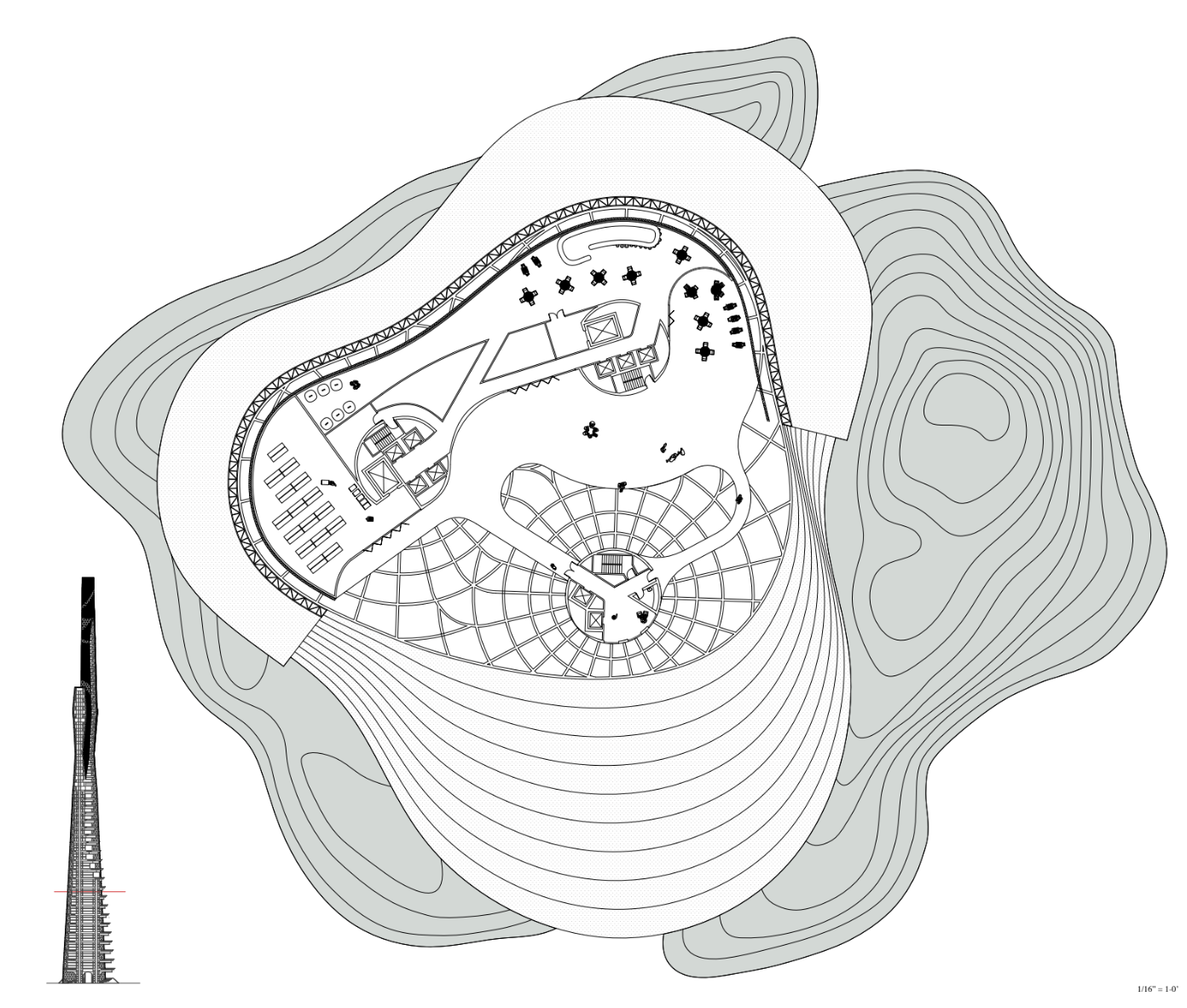
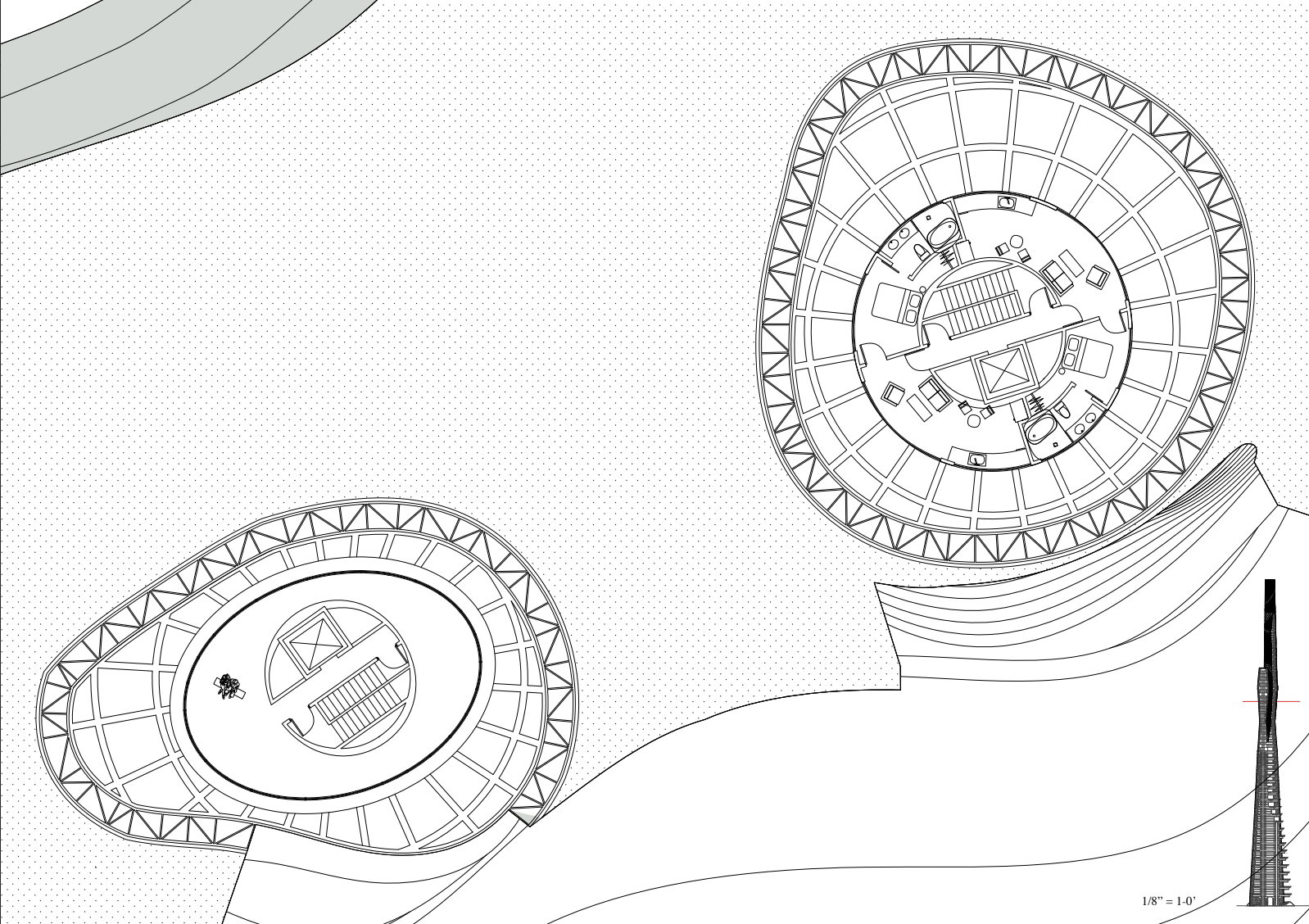
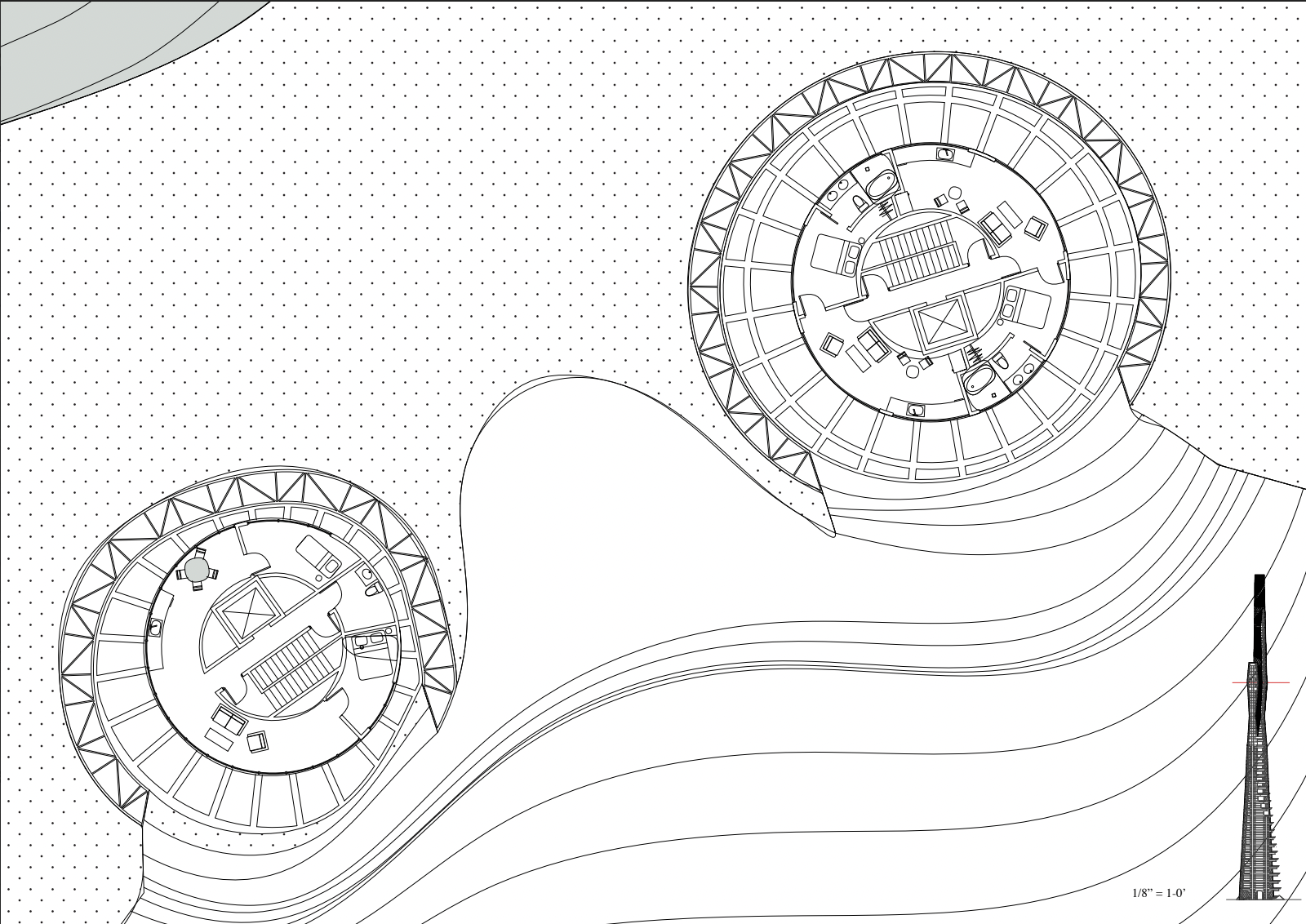
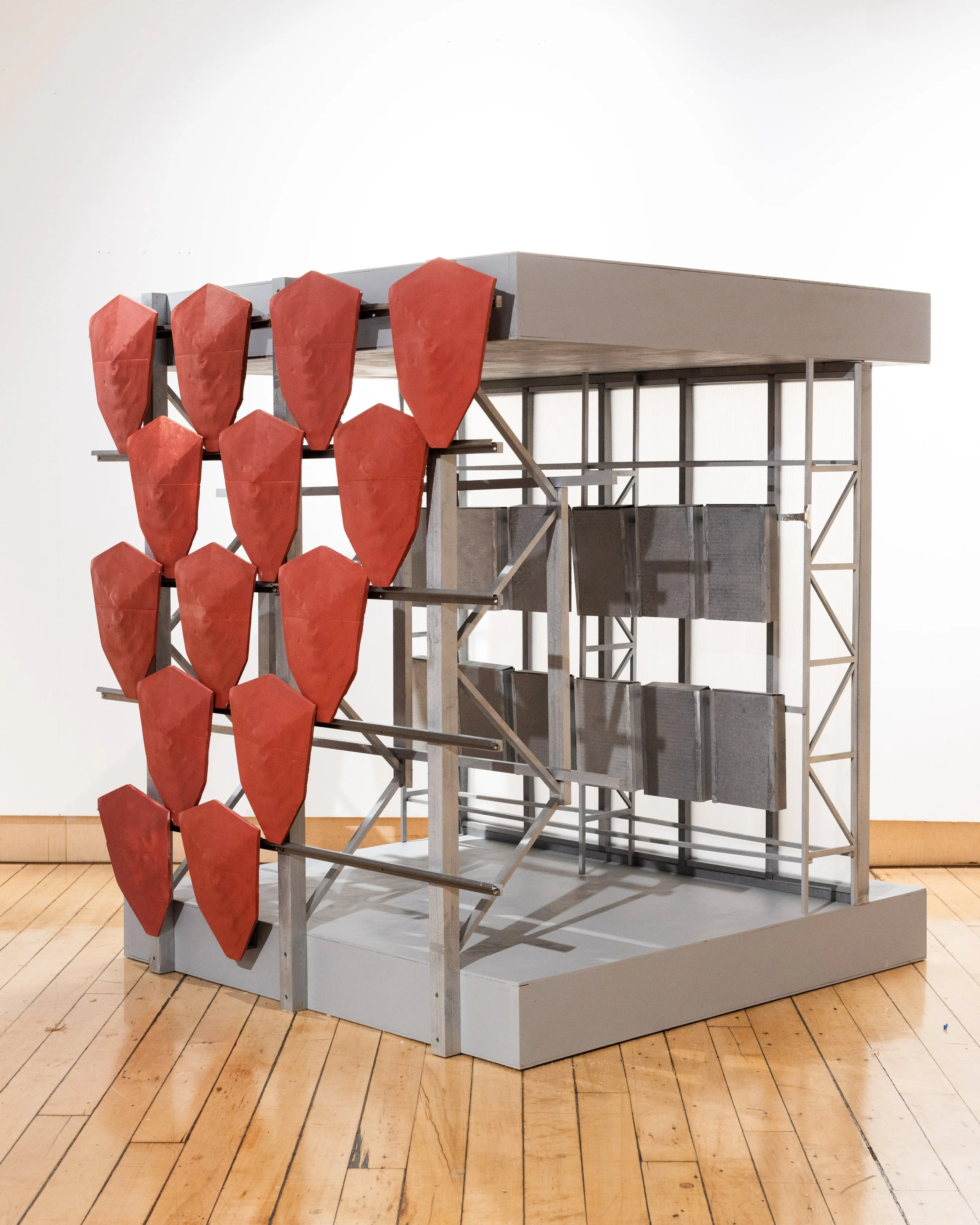
The final iteration of the tower evolves into a three-core structural system wrapped in a double-skin façade. The outer layer of the façade is composed of terracotta tiles, referencing the regional practice of Al Hab. These tiles act as a passive cooling system protecting the AWG modules from the Dubai sun.
The inner layer of the façade houses the AWG modules, which collect atmospheric moisture and distribute water directly to the tower’s agricultural infrastructure. Within the building, farming and residential floors alternate vertically, creating a symbiotic relationship between human and resource. This hybrid organization also accommodates additional programming, including agricultural research facilities, commercial spaces, and educational centers.